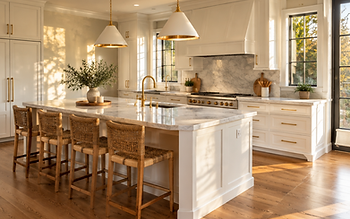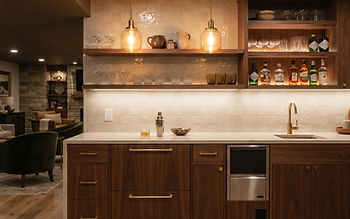
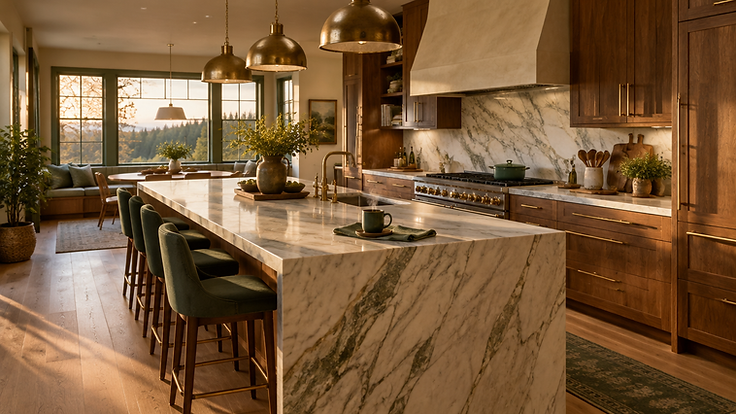
Almost every first conversation about a kitchen starts with the same question. What is this going to cost? It is the right question, but it is usually asked before the more useful one: how much of the room is actually moving?
Start with the scope, not the number
The biggest driver of a kitchen budget is not the cabinets or the countertops. It is how much of the room changes. A refresh that keeps the plumbing, the walls, and the layout where they are costs a fraction of a remodel that relocates a sink or takes out a wall.
What the ranges look like
Across the Kansas City area, most of the kitchens we build land in one of three bands.
- A refresh. New cabinet fronts, counters, backsplash, lighting, and paint. The footprint stays put.
- A full remodel. New layout, new cabinets, new appliances, and usually new flooring. This is where most families land.
- A structural change. Removing a wall, adding an island, or moving plumbing. Expect engineering, permits, and a longer schedule.
The most useful thing you can bring to a first meeting is not a budget. It is a clear idea of how you want to use the room.
Where the money actually goes
Cabinetry is typically the largest single line item, followed by labor, then counters and appliances. Lighting and electrical are easy to underestimate, especially in older homes where the existing wiring will not carry a modern kitchen.
Allow a contingency
Every honest builder budgets for surprises. In a home older than forty years, opening a wall can reveal anything from outdated wiring to a vent that has to move. A contingency is not padding. It is the difference between a smooth project and a stalled one.
How to compare two estimates
Two estimates that look similar on the bottom line are rarely the same job. Check what is included: permits, disposal, paint, and the allowance for fixtures. Ask what happens if an allowance runs over.
If a number looks dramatically lower than the others, something has been left out. Ask what.